


























Coal & coke petrography

Coal petrography is performed to characterize coals, particularly the organic portion coals. This test-work may be required for initial characterization of exploration samples, for determination of the utilization potential of a coal, for certification of shipment quality or for other technical applications. A similar analysis can be performed on coke samples where coke microtexture analysis provides an indication of the proportion of fusible and infusible components in the coke.
Process overview

Coal petrography is performed on a coal sample with a 1mm particle top-size that has been crushed in a particular way to produce a minimum of fines. This coal sample is mixed with a binder, such as acrylic resin, and the mixture is placed into a mold and allowed to set. Once the petrographic block is solid, it is removed from the mold and subsequently cut and polished to produce a surface that is free of scratches and relief. This is placed under a reflected light optical microscope to perform the analyses.

Equipment:

  • ALS uses high quality Struers Tergra semi-automated polishers to achieve the required polish on the sample surface.
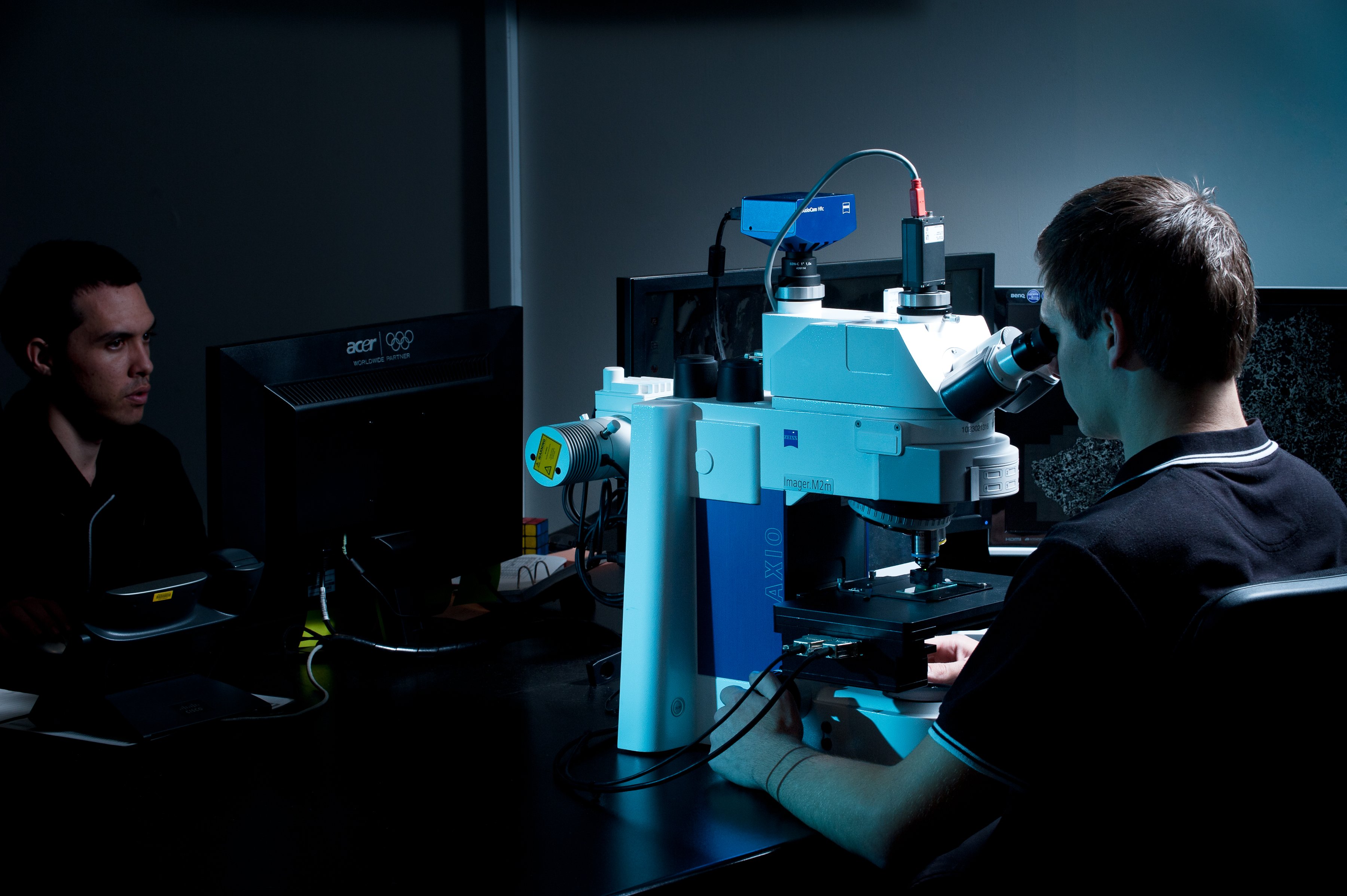
  • To perform coal petrography analyses, ALS uses Zeiss Axio Imager M2m microscopes with Fossil point counting software. Analyses are typically performed at X500 magnification.
  • Results are stored in ALS’ in-house laboratory information management system (LIMS), named Coal8.

There are two standard coal petrographic analyses:

  • Maceral Analysis an analysis that determines coal type. Three different organic components are readily identified on a polished surface of coal when observed under a reflected light microscope. These organic components, termed maceral groups, are vitrinite, liptinite and inertinite. These groups are further divided into individual macerals. The role of the petrographer is to start at one corner of the polished sample block and identify the maceral under the microscope’s crosshairs. The petrographer then moves the stage 0.5 mm across the block and identifies the next maceral under the crosshairs. This process is repeated in a raster pattern across the whole polished surface until a minimum of 500 counts are made. The results are then collated to determine the volume percent concentration of the macerals in the sample.
  • Vitrinite Reflectance Analysis determines the rank of the coal. The reflectance of vitrinite increases with increasing rank in the bituminous coal rank range and therefore this test provides fundamental insights into the utilization potential of the coal. To perform this test, calibrated plain polarized light is directed to the surface of a vitrinite maceral and the greyscale intensity returned off this surface is measured. While this is happening, the sample is rotated through 360° and, when the plain of vibration of the polarized light aligns with the sub-graphitic texture of the coal, a maximum reflectance value is achieved. This reflectance value is retained. The petrographer then moves across the surface of the sample in a raster pattern repeating the process. Once the petrographer has collected sufficient maximum reflectance values to satisfy the relevant standard, the analysis is halted and the mean of the maximum reflectance values is determined. This result is called the mean maximum vitrinite reflectance. Occasionally this is shorted to R o MAX or MMR.

ALS also perform non-standard petrographic analyses:

  • Coke Microtexture Analysis is performed on coke samples. To perform coke microtexture analysis a sample of coke is mounted and polished is a similar way to the coal samples. It is also analyzed in a similar way to maceral analysis. However, in this analysis, the petrographer is classifying the coke into fused, partly-fused and unfused components. Beyond that, the petrographer observes the domain size of the fused coke's mosaic or foliated texture to determine the nature of the parent coal. Mas balance calculations on the maceral analysis and coke microtexture analysis results allow insight into the concentration of inertinite that becomes fusible during carbonization.
  • Coal Grain Analysis (CGA) is an image analysis which uses the Particle Imaging System (ParIS) developed by CSIRO. Images are captured on a Zeiss Axio Imager M2m microscope in reflected light mode and stitched together using Zeiss Zen imaging software. The CSIRO ParIS software then processes these images to provide quantitative data on the size and composition of individual coal particles. The system can identify the volume percent concentration of vitrinite, liptinite, inertinite and minerals for each coal particle as well as the size of each particle (feret diameter).

Control systems

To ensure ALS delivers reliable results, ALS' petrographers are evaluated and certificated by the International Committee for Coal and Organic Petrology (ICCP). The petrography unit is also accredited to ISO 17025 for maceral analysis according to AS 2856.2 and ISO 7404.3 and to vitrinite reflectance according to AS 2856.3 and ISO7404.5.


Laboratory support

Coal petrography is not usually performed as a standalone test but rather as a component in a comprehensive testing program including pilot-scale coal carbonization tests. ALS has well-equipped laboratories capable of performing a broad range of coal analysis through an extensive coal laboratory network.

Related topics