Roasting & salcination

Roasting and calcination is an important pyrometallurgical process using superheated gas to either oxidize or decompose valuable minerals (or salts) into a leachable or water-soluble form for downstream extraction. The application of roasting and calcination in the oxidation of sulphides has been used for centuries, but in recent times with the processing of energy metals it is becoming more important than ever. ALS has an extensive range of roasting and calcination capabilities, primarily at benchscale level and can incorporate roasting and calcination seamlessly into a complex hydrometallurgical program.
Roasting & calcination services

Roasting and calcination essentially revolves around the available furnaces and gas delivery mechanisms to control the atmosphere at temperature. ALS's benchscale furnaces include the following:

  • Muffle furnaces. These units are small brick lined electric furnaces, which can roast 5 kg charges at temperatures up to 1250 deg C. The sample is static and held in trays inside the furnace. Any rabbling of the furnace is by hand.
  • Batch rotary (electric) kilns, including the Midrex. These units are capable of roasting up to 5 kg batches at temperatures of up to 1,100 °C at a variety of gas atmospheres.
  • Continuous Across International dual zone rotary kiln, which can achieve temperatures up to 1400 deg C at a feed rate of 1 kg per hour, also within a variety of gas atmospheres to suit the required conditions.
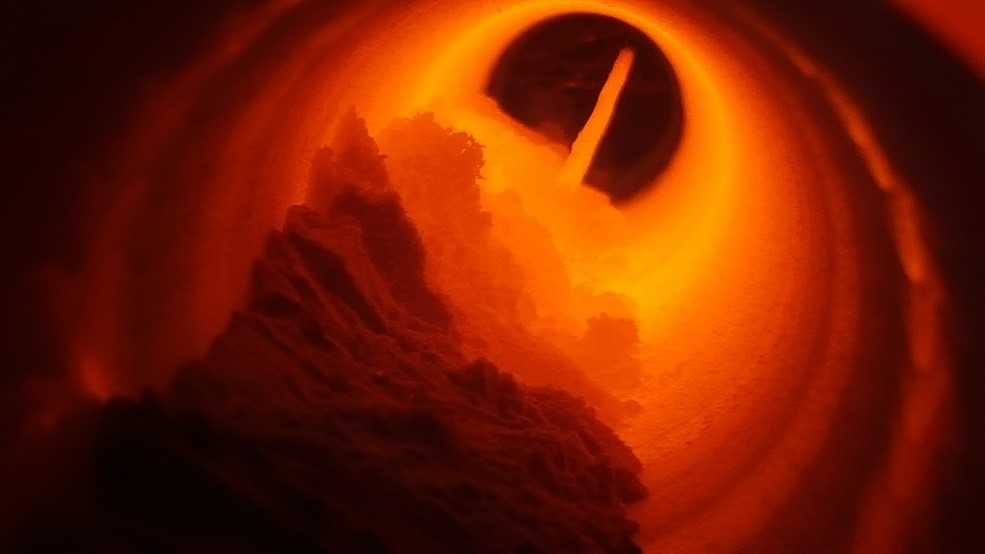
  • Batch fluid bed roaster. Housed in a ceramic brick electric furnace, the conical roaster tube can treat progressively fed charges up to 5 kg under fluidised gas conditions.
  • Pilot scale fluid bed roasters. ALS Metallurgy’s pilot-scale Dorr Oliver fluid-bed roaster consists of a stainless-steel roaster tube housed in a brick lined chimney, together with a cyclone separator, particulate filter, and an off-gas scrubber assembly. Feed rate is a function of air flow, operating temperature and fluidising velocity (space rate). Air flow is dependent on reaction stoichiometry and any excess required to drive the desired result.

Common roasting and calcining applications are:

  • Oxidation of sulphide minerals, such as pyrite and chalcopyrite prior to downstream cyanidation.
  • Acid baking of REE and lithium concentrates to decompose the valuable minerals and convert the metals into water soluble salts. Typical conditions are 200°C to 400°C and 500-2000 kg sulphuric acid / t concentrate.
  • Salt roasting of vanadium concentrates to convert the value metals into water soluble salts. Typical conditions are 1000°C to 1250°C and 20-200 kg soda ash / t concentrate.
  • Calcining of purified salts to generate high purity products such as high purity alumina by converting the salts into metal oxides. Temperatures can vary from 600°C to 1200°C.

Note that ALS has strong alliances with local furnace manufacturers and can have bespoke furnaces fabricated to suit a specific roasting application.


Also, in cases where international kiln vendors have been engaged, ALS will happily organise the dispatch of testwork products (i.e. roast/calcination feed) to external vendors and receive calcine product back for further testing.

Don't see what you need or are unsure about some of the services and associated requirements?

Hydrometallurgical testwork is always complex, and so we are happy to help walk you through the process, or meet your requirements exactly.

Please contact us for further details.

Here are some frequently asked questions

  • Can I do my own testwork in ALS’s laboratory?

    Generally, no. Insurance and safety protocols typically prevent renting laboratory space and this is not part of ALS’s business model. Clients are able to visit and witness testwork but this is to observe only! Typically, clients may attend on 24/7 piloting campaigns and interact with senior staff members for Technical interactions.

  • Can vendors attend the ALS lab to do associated testwork?

    Yes, Vendors and SX reagent suppliers often attend during specific bench and pilot scale testwork periods to conduct offline tests.

  • Can my associates and I view the testwork at ALS’s laboratory?

    Yes, clients are always welcome to visit our facilities and observe samples or tests in progress. Inductions are required and other rules may apply to visitors.

  • Will ALS dispatch my samples to third parties?

    Yes, if a testwork program is in progress, ALS will happily dispatch testwork products and feed samples to vendors, third party laboratories, and customers as required. Fees apply.

  • Does ALS do bulk roasting pilot testwork?

    Yes, for fluid bed roasting. However, at this stage pilot calcinators (Kilns) are limited to small scale due to the expense and infrastructure required and samples are usually dispatched to the USA for treatment. ALS would be amenable to a capital share partnership with local clients wanting to establish a larger scale pilot kiln capability.

  • Does ALS do design engineering and consulting?

    No, as it is not our core business and would put us in direct competition with many of our clients. We can, however, put you in contact with a range of reputable engineering providers and consultants.

Associated testwork services

Roasting and calcination never happens in isolation and typically many other processes are inter-related, such as leaching, CCD, filtration, recycles, impurity removal, purification etc.


Click on the above links or contact us for further information. We can integrate a full program for you if required.